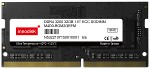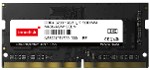

Innodisk Ultra-Temperature DDR4 DRAM Module for Temperatures up to +125°C

Innodisk, Eindhoven, 25.11.2021 - Modern industrial designs are becoming increasingly compact, and heat-intensive computing and data processing are being integrated into progressively smaller units. Heat-sensitive components must be housed without system or functional limitations within these tight spaces. Typically, components intended for industrial applications are rated for a temperature range of -40°C to +85°C. Innodisk's Ultra Temperature Storage supports a temperature range of -40°C to +125°C. As a result, these components are suitable for temperature-sensitive applications.
In self-driving vehicles, there are not only increased demands on data processing. Additional heat, for example from direct exposure to high temperatures in very small enclosures, presents further challenges. Fanless embedded systems are often operated in harsh environments with limited space for heat sinks and fans. There is a risk of system crashes or permanent damage if the system temperature exceeds specifications. Mission-critical systems require absolute reliability, sometimes in environments unsuitable for electronic devices. They often operate at ambient temperatures that would destroy a normal system.
Innodisk offers free upgrades of their products to ensure performance in critical environments. A 45µ" gold finger contact provides a more robust and reliable connection than the typical 30µ" gold finger contacts used in industrial-grade DRAMs. The Side Fill technology protects and reinforces sensitive solder joints against thermal and mechanical stress. Anti-Sulfuration offers an additional protective layer for sensitive parts, guarding against sulfur corrosion of silver alloys. An integrated temperature sensor constantly measures and monitors the component temperature.
To qualify for the Ultra Temperature label, components are verified by external testers following the AEC-Q200 automotive qualification. This includes, among others, the gold finger insertion and extraction test performed over 100 cycles. The thermal shock and vibration tests comply with MIL-STD-810G, the United States military standard, and the drop test is conducted according to ISTA-1A by the International Safe Transit Association. The Japan Electronic Industry Standards (EIAJ-4072) specify the requirements for the bend test.
The Ultra Temperature DRAM module is capable of operating reliably without failure across a wider temperature range. This streamlines the development of systems in harsh environments. The demand for such solutions is expected to increase, especially in the self-driving vehicle market, which is projected to grow rapidly in the coming years. Growth is estimated at around 65 billion USD by 2026, representing an average annual growth rate of over 20%.
Publisher of the message (text / image): Innodisk Europe B.V., www.innodisk.com